BUOY PRODUCTS
MADE FROM RECYCLED OCEANBOUND PLASTIC
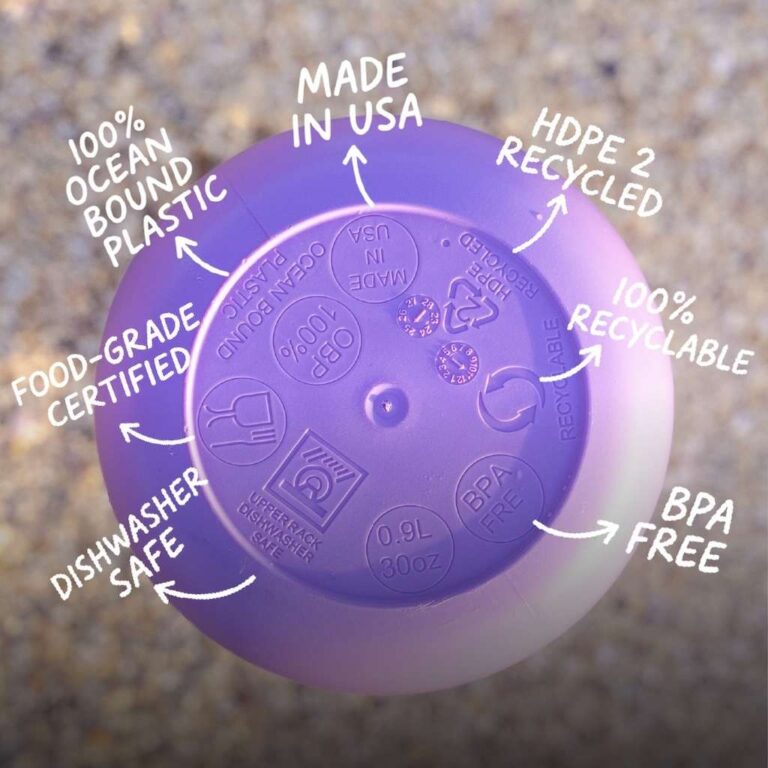
- Food-grade & BPA-free
- 100% Recyclable
- UV Resistant
- Award-winning design
- Mix & Match Colours
- Made in California
Make a Difference.Eco is the exclusive Australian distributor for the Buoy LLC range of products; including the iconic Buoy drink bottle.
Buoy is on a mission to create functional and beautifully designed products for everyday life, while keeping materials in circulation through thoughtful use, reuse and recycling.
Buoy gives plastic waste a new purpose. Using recycled HDPE exclusively, Buoy transforms plastic waste into reusable, recyclable, food-grade drink bottles, coffee mugs and food storage containers in its California facility. It represents the circular economy in action.
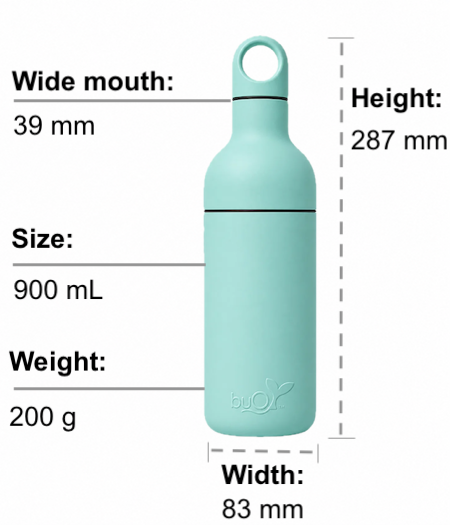
Buoy Bottle at a Glance
Buoy FAQ
What are Buoy products made from?
All Buoy products are made from recycled OceanBound HDPE (high-density polyethylene) that has been collected, sorted, cleaned, and reprocessed into bottles, coffee cups and food containers.
Where does Buoy source the plastic that it uses for its products?
Buoy sources its raw material from Envision Plastics, a global leader in plastic recycling technology and the company that supplies its proprietary OceanBound Plastic resin. Learn more here.
In 2017, Envision Plastics launched its OceanBound Plastic, having partnered with local communities in at-risk areas around the world to recover plastic waste.
Cleaner oceans start by preventing waste from entering waterways in the first place. Launched in 2017, Envision’s OceanBound Plastic initiative tackles this by partnering with under-resourced communities around the world to intercept HDPE plastic waste before it reaches the ocean. By financially supporting these areas, Envision helps build robust collection and shipping processes that transform local waste into a reliable, recyclable resource.
By definition, OceanBound Plastic is collected within 50 kilometres of a coastline in an area lacking proper waste management. For example, a plastic bottle collected in a well-managed municipality like Santa Monica, California, is not considered ocean-bound because the risk of it entering the ocean is low. Conversely, identical waste collected in a region without adequate infrastructure carries a high risk of ocean pollution, making its interception vital.
Combining supply chain experience with technical expertise, Envision processes this material into versatile HDPE resin suitable for a wide range of sustainable manufacturing applications. This article provides further information of the commitment of Envision.
Can a Buoy bottle be branded?
Yes, Buoy bottles can be branded with various print and UVDTF options and colours. Please contact our sales team at sales@makeadifference.eco for a chat about options.
For example, in the US Buoy has previously partnered with SSA Group to provide branded bottles to 35 zoos, museums and aquariums. Buoy is trusted by Fortune 100 companies and leading US universities.
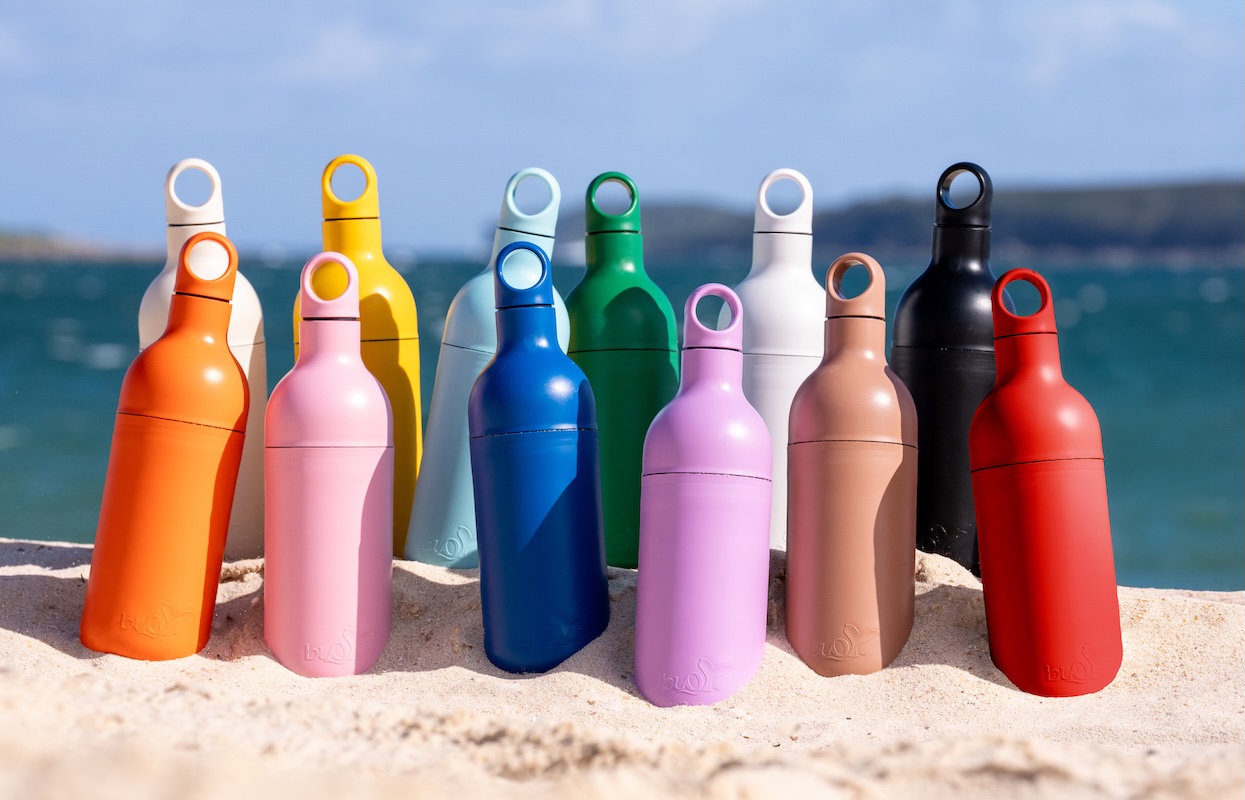
Buoy bottles come in 12 standard colours that can be mixed and matched to satisfy a brand’s dual or triple colour scheme, allowing for over 1700 colour combination options.
Additionally, Buoy bottles can be custom made to match a brand’s PMS colours.
Buoy bottles are the ideal corporate gift for organisations that want to provide a tangible asset that sparks conversations and builds awareness of ESG achievements.
Are Buoy products recyclable?
Yes. All Buoy products can be put into kerbside recycling bins across Australia.
Are Buoy products BPA-free and dishwasher-safe?
Yes, Buoy products do not contain any Bisphenol A (BPA). Buoy bottles can easily be taken apart and all 3 components put on the top rack of your dishwasher (not the bottom near the heating element). Alternatively, the bottles are easy to hand wash.
Why does Buoy use OceanBound Plastic to make its products?
OceanBound plastic is defined as plastic collected within 50 kilometres of a coastline in an area that does not have good waste management. So, a plastic bottle collected in Santa Monica, California is not OceanBound, because it exists in a place with good waste management. The chances of it getting into the ocean are low. If you are in the Dominican Republic, where there is not good waste management, there is a certain chance that such waste may get into the ocean, so the collection helps and it’s designated OceanBound.
When Buoy purchases OceanBound plastic, and subsequently when you purchase a Buoy bottle, we are together underwriting the building and maintenance of waste collection infrastructure in places that do not have good waste systems.
It’s romantic but not accurate to think that the plastic Buoy uses is collected from the edge of a cliff as it is in the process of being blown into the surf or from a river delta flowing to the ocean. These would make cute social media posts, but the good work being underwritten by the purchase of OceanBound plastic and your purchase of a Buoy bottle is to collect and sequester the waste before it has a chance to enter a stream or a river and choke it with plastic.
The OceanBound Plastic sourced by Buoy has come from Mexico and Haiti. More recent collections have been from the Dominican Republic. These areas need more sophisticated waste management and employment through the construction and operation of this infrastructure. Once the system is up and running, it organises waste disposal in a wide swath of land bordering the ocean. These are all good things.
Democratising better waste management throughout the world is a minimal first step in controlling our global waste problem.
Buy a Buoy bottle and be a part of the circular economy.
What does it mean that Buoy products are food-safe?
Buoy purchase from Envision a specific type of recycled HDPE resin called EcoPrime.
The U.S. Food & Drug Administration (FDA) confirmed via Prenotification Consultation (PNC 2534) that Envision’s post-consumer recycled HDPE is suitable for up to 100% recycled content in food containers to be used by the general population, including infants. The PNC confirms previous Letters of No Objection (LNO) for food-contact applications under Conditions of Use C through H.
Where are Buoy products made?
Buoy products are manufactured in Los Angeles, California, USA, in a solar-powered facility, with rigorous quality control standards implemented throughout the production process.
Where can I buy Buoy bottles?
Contact sales@makeadifference.eco for a chat about your requirements.